
& emsp; & emsp; Several Opinions of the Central Committee of the Communist Party of China and the State Council on Further Strengthening the Management of Urban Planning and Construction was issued recently, which is a supporting document of the Central Urban Work Conference restarted after 37 years, outlining the "road map" of China's urban development in the 13th Five-Year Plan and even longer. It is proposed that policy support will be strengthened and that the proportion of prefabricated buildings in new buildings will reach 30% in about 10 years.
So, here's the problem. What is a prefabricated building? In short, it is "building blocks" to build houses and "produce" houses on the assembly line. The doors, windows, walls and other parts manufactured in advance on the factory assembly line are assembled together to form a house.

What are the advantages of building a house in this way? First of all, this "building block" type of building mode can ensure the use of green building materials and production processes, but also can effectively reduce dust pollution and construction waste. Secondly, this kind of large-scale production can reduce costs and labor, and the construction speed will be accelerated. Finally, the standardized production of each part ensures the quality of the parts.
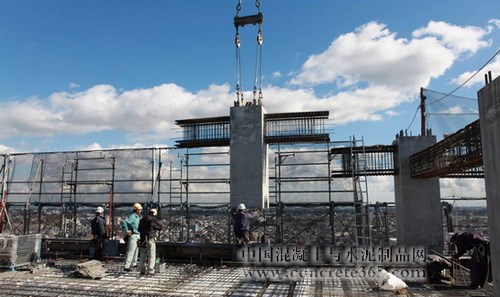
Fabricated structure construction and installation site in Japan
In fact, Japan put forward the concept of prefabricated housing as early as 1968. Since 1990, the production mode of components and factories has been adopted, which not only has high production efficiency, but also can adapt to the diversified needs of the internal structure of residential buildings. Japan has passed legislation to ensure the quality of concrete components, formulated a series of policies and standards for prefabricated housing, and solved the contradiction among standardization, mass production and diversified demand.
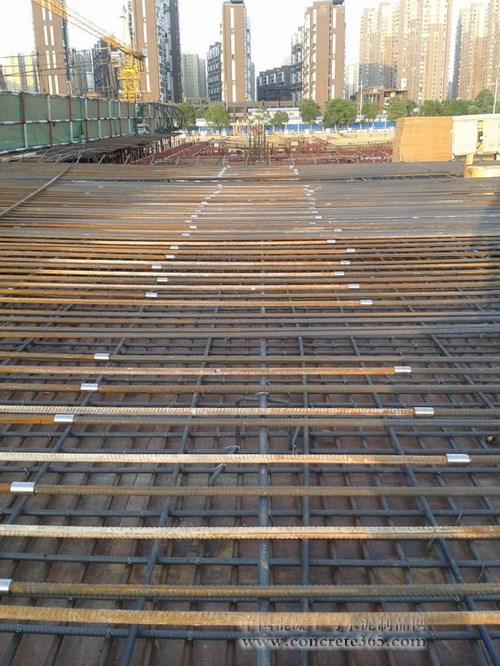
Reinforcement sleeve connection technology
The connection between columns in prefabricated buildings adopts the "steel sleeve connection technology". The technology was introduced into Japan in 1972, and after continuous improvement, the latest technology is to mechanically connect and fix one end of the sleeve (a fitting used to connect steel bars) with the steel bars through threads in the factory, and to grout the other end of the steel bars at the construction site with high-strength materials (to press the grout into the cracks of the building). The impermeability and stability of the building can be improved). After years of testing in earthquake-prone Japan, this technology is considered safe and reliable and can be safely used in high-rise buildings.
As a new construction method, prefabricated building has many advantages that traditional buildings can not match. In the era of rapid development of modern construction industry, we should boldly change our concepts and ideas, learn from the beneficial experience of Japan and other countries, invest more manpower and material resources to study and develop prefabricated buildings, make them the mainstream direction of the development of modern construction industry, and provide people with more comfortable, safe, green and environmentally friendly living space.


 浙公网安备33010802003254号