
world, recently announced that it has signed a strategic cooperation agreement with Jingtai Technologies, a platform-based enterprise with artificial intelligence + robot enabling R & D and innovation, and that the two sides will jointly establish a joint venture company. Promote the cooperative research and development of high-throughput perovskite tandem solar cells based on AI technology. This marks a strong alliance between the two leaders in different technical fields, formally opening up a deep synergy in the next generation of photovoltaic technology , such as perovskite stack, aiming at reshaping the photovoltaic R & D paradigm through "AI + Robot" . Accelerate the process of R & D and industrialization of disruptive technologies.
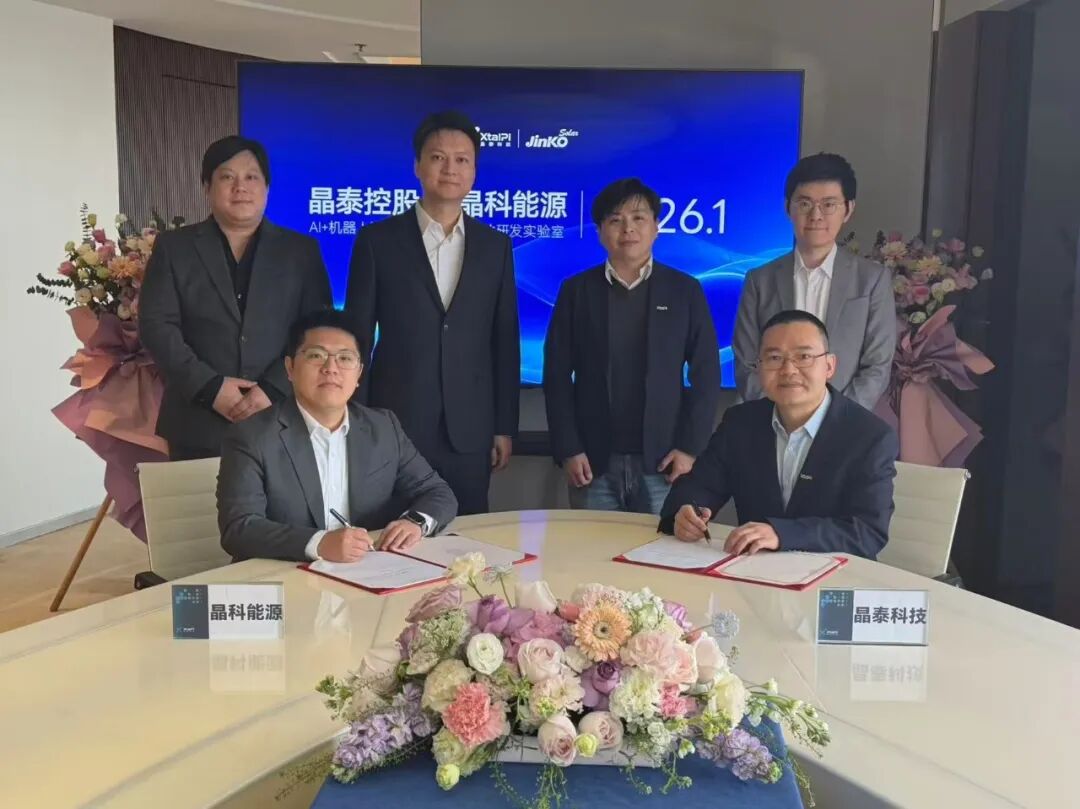
According to the agreement, the two sides will jointly build the world's first " AI Decision-Robot Execution-Data Feedback " full-closed-loop perovskite-silicon stack experimental line. Relying on the deep accumulation of photovoltaic research and development of Jingke Energy and the unique advantages of Jingtai Science and Technology in the frontier fields of quantum physics algorithm, AI prediction model and large-scale robotic automation experiment, we focus on high efficiency and high stability of perovskite tandem solar cells. This cooperation is the key to Jingke Energy's innovation strategy of " exploration generation , R & D generation and mass production generation ", aiming to drive self-breakthrough through technological integration.
This deep collaboration is based on the leading technological advantages built by both sides in their respective fields. As the leader of global photovoltaic technology innovation, Jingke Energy has always regarded technological innovation as the core driving force of enterprise development, with a cumulative R & D investment of more than 20 billion yuan and more than 5500 patents in recent years. Among them, there are more than 3100 authorized patents , 731 industry-leading patents related to N-type TOPCon, industry-leading patent layout and perfect technical barriers of N-type TOPCon. As an innovator in the field of AI + materials science, Jingtai Science and Technology, based on its data mining platform and modular robotic automation experimental capability, combines the AI R & D engine driven by quantum physical model and vertical large language model to realize the structure, formula, process, characterization and device performance of perovskite materials. Create an automated agent closed-loop of " design-experiment-feedback-optimization " to efficiently solve a series of key challenges in the R & D and design of perovskite batteries. Based on the solid technical foundation and cooperation plan of both sides, Jingke Energy expects perovskite tandem batteries to move towards large-scale production in the next three years or so. The research and development mode of
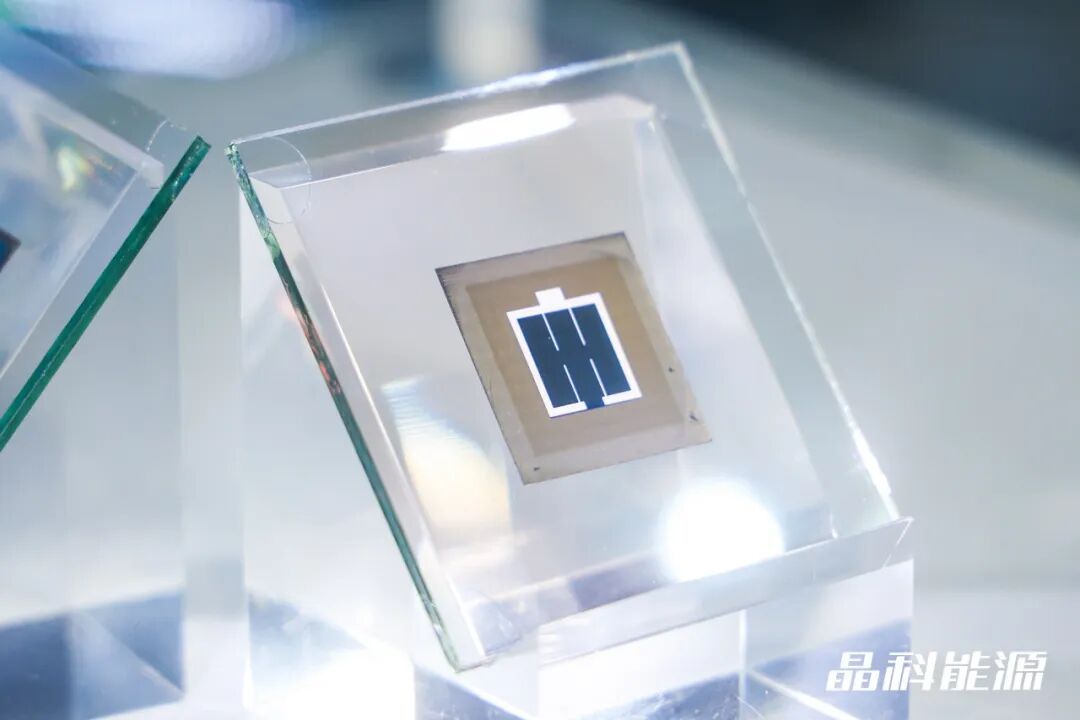
integrating AI will directly promote the maturity of perovskite tandem cell technology, and then reshape the imaginary boundary of photovoltaic application . In the ground field, perovskite/silicon stack modules are expected to significantly reduce the cost of electricity (LCOE) and improve the system economy by about 15% compared with traditional technologies. More important is its potential for space applications: perovskite tandem cells, with their " high efficiency , low cost , lightweight ," Compared with other technical routes, the intrinsic advantages such as " flexibility " are more in line with the needs of space photovoltaic, which is the optimal solution for space photovoltaic in the medium and long term. This lightweight, highly radiation-resistant energy system solution can significantly reduce the deployment area of satellite solar wings and leave more load space for other key devices. The far-reaching significance of
this cooperation is that it is not only a breakthrough in a single technology, but also indicates that when AI and automated robots replace the traditional "trial and error method", the innovation rate and boundary of the entire photovoltaic industry will be redefined. What we can see is not only the climbing of R & D efficiency, but also the fundamental change of energy innovation paradigm.
About XTALPI
XTALPI ( "XtalPi Holdings Limited" ", stock abbreviation: XTALPI Holdings, stock code: 2228.HK) was founded in 2015 by three physicists from MIT. It is an innovative research and development platform based on quantum physics, enabled by artificial intelligence and driven by robots. The Company provides pharmaceutical and materials science R & D solutions and services to global and domestic companies in the pharmaceutical and materials science (including agricultural technology, energy and new chemicals, and cosmetics) industries by combining first-principles computing based on quantum physics, artificial intelligence, high-performance cloud computing, and scalable and standardized robotic automation.


 浙公网安备33010802003254号