
How to make thin and flexible perovskite solar (5.830, 0.20, 3.55%) cells not only maintain high efficiency, but also produce them stably and evenly in large areas? This is a difficult problem that puzzles academia and industry.
Recently, the Qingdao Institute of Bioenergy and Process, the National Key Laboratory of Solar Photovoltaic Conversion and Utilization of the Chinese Academy of Sciences and the research team of the Hong Kong University of Science and Technology have made new breakthroughs in the field of buried interface engineering of perovskite solar cells. They pioneered the strategy of "solvate crystal pre-seeding", which brings new hope for the realization of efficient and large-scale production of perovskite photovoltaic modules . The results were published in the international academic journal Nature-Synthesis.
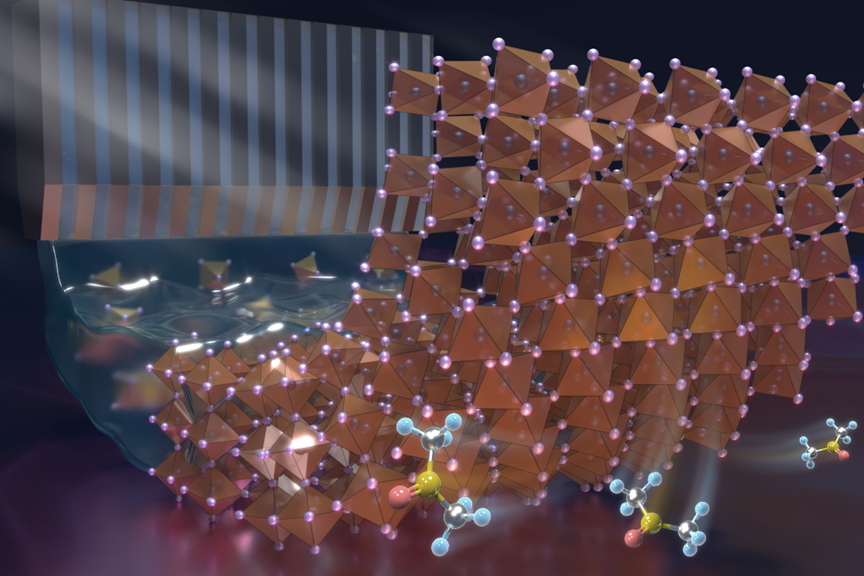
Solvate seed accelerated crystal growth and controllable solvent release process
Perovskite solar cells are regarded as a strong candidate for "next-generation photovoltaic technology", which has the potential of high efficiency and solution processing. However, in the inverted structure battery which is widely studied at present, the micro-defects of the bottom interface which are difficult to control seriously restrict the performance and long-term stability of the battery, just like the "weak foundation" affecting the stability of the whole building.
In order to solve this core problem, the research team has developed a universal control method called "crystal-solvate pre-seed" (CSV). The core of the method is that a layer of specially designed low-dimensional halide solvate crystals is deposited on the substrate in advance and laid on the substrate in advance as a "seed crystal". This strategy is like building a "guiding scaffold" for the growth of perovskite thin films in advance. Through this synergistic mechanism, researchers have successfully constructed a dense, flat, high-quality active layer with better crystalline orientation at the bottom of the perovskite film, which fundamentally eliminates the common defects such as buried interface holes and deep grain boundaries.
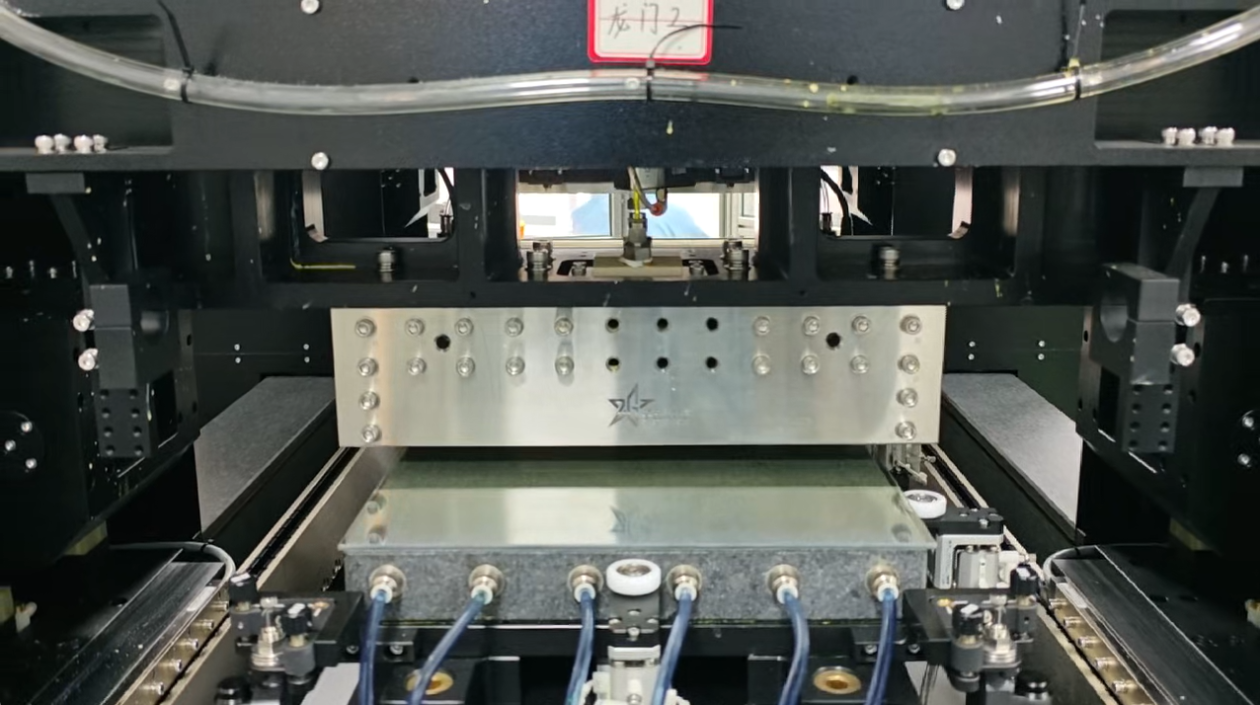
In order to verify the industrialization potential of this strategy, the team further combined it with the "slit coating" process suitable for large-scale production. Perovskite solar micromodules with a light input and output area of 49.91cm2 were successfully fabricated, and a certified efficiency of 23.15% was obtained. The efficiency loss rate from small laboratory cells to large area modules was very low (less than 3%), showing excellent process scale-up capability and uniformity control level.
This study provides an efficient and universal solution to overcome the interface bottleneck of trans-perovskite solar cells, and its concept of "crystal-solvate pre-seed" is a powerful material platform, which can be derived from a variety of functional "seeds" by changing the composition. It opens up a new technical path for the precision manufacturing of perovskite and other new soft semiconductor optoelectronic devices.
This research is expected to promote the commercialization of perovskite photovoltaic technology in building integration, wearable electronics, new energy vehicles and other fields, and inject new scientific and technological impetus into the future development of clean energy .


 浙公网安备33010802003254号