
2025, the National Development and Reform Commission and the State Energy Administration issued the Guiding Opinions on Promoting the Absorption and Regulation of New Energy (No.1360) and the Guiding Opinions on Promoting the Integration and Development of New Energy (No.93) . It has become an important guiding document for the development of new energy in the next period before the "15th Five-Year Plan" energy or power special plan comes out.
This paper combs the core requirements of the two new policies in the application of new energy multi-scenarios, industrial integration, the adaptability of new power systems, and the improvement of market-oriented mechanism. As well as the transformation
of https://www.databm.
energy structure driven by the New Deal, China has built the largest and fastest growing renewable energy system in the world. Among them, the proportion of wind and solar new energy power generation has increased from about 25% at the beginning of the 14th Five-Year Plan to 46% at present, and the annual new installed capacity has broken through 100 million, 200 million and 300 million kilowatts successively, leading the world in the speed of large-scale development.
According to the data of the National Energy Administration, as of January-October 2025, the cumulative installed capacity of power generation in China has reached 3.75 billion kilowatts, an increase of 17. Among them, the installed capacity of solar power generation is 1.14 billion kilowatts, an increase of 43.8%; The installed capacity of wind power is 590 million kilowatts. Year-on-year growth 21. Wind power, Accumulated PV installed capacity has reached 17.

The second is the challenge of power grid supporting, the growth rate of power investment is faster than that of power grid, there is a local problem of "strong source and weak network", the transmission capacity and access capacity of power grid are insufficient, it is difficult to meet the needs of large-scale grid-connected and long-distance transmission of new energy;
the third is the challenge of regulation capacity, the demand for system regulation resources is rapidly expanding;
Fourth, the challenge of market mechanism. After new energy enters the market in an all-round way, the market trading mechanism and price formation mechanism need to be further improved to reasonably reflect the value of new energy, promote fair competition in the market and ensure long-term development;
Fifth, environmental and resource challenges, new energy development may have an impact on land, ecology and so on, need to further enhance the efficiency of resource utilization and strengthen environmental protection.
Faced with many challenges, China needs to change the logic of new energy development in a timely manner, from the dominant consumption of large power grids to the efficient utilization of the combination of far and near, from pure electricity consumption to both electricity and non-electricity, from single mode to multi-integration, from resource-oriented to interest-oriented, from rough development to land, environment and technology coordination. In November
2025, the National Development and Reform Commission and the State Energy Administration issued the Guiding Opinions on Promoting the Absorption and Regulation of New Energy (No.1360) and the Guiding Opinions on Promoting the Integration and Development of New Energy (No.93). It has become an important guiding document for the development of new energy in the next period before the "15th Five-Year Plan" energy or power special plan comes out.
Document 1360 focuses on the systematic problems existing in the development and operation of new energy, and puts forward a series of specific measures from the dimensions of planning guidance, infrastructure, market mechanism and technological innovation, focusing on meeting the demand of rational consumption of new energy with an annual increase of more than 200 million kilowatts by 2030. The core of No.
93 focuses on the "left-right" integration of new energy and other energy varieties, the "front-back" integration of new energy production and consumption, and the "up-down" integration of new energy industry chain. The integrated development of new energy is summarized into three aspects: multi-dimensional integrated development of new energy, coordinated development of new energy and multi-industry, and diversified non-electric utilization of new energy.
(1) Co-ordinate multiple scenarios, adhere to centralized and distributed collaborative promotion
, break the single development mode, emphasize the combination of resource endowment, spatial characteristics and energy demand, build a "centralized + distributed" complementary development pattern, taking into account the scale effect and local utilization.
Centralized new energy: focus on promoting the construction of "Shagehuang" base, water, wind and solar integrated base, offshore wind power base and provincial centralized projects, and clearly optimize the channel allocation and layout efficiency.
Distributed new energy: focus on expanding the development space, tap the potential of construction, transportation, rural areas, islands and other scenarios, and increase the proportion of self-use by promoting the mode of "direct and flexible light storage" and "integration of source, network, load and storage".
(2) Take "integration and integration" as the core, promote the deep coupling
with multiple fields, break through the single power generation attribute of new energy, take "integration and integration" as the core development path, and promote the all-round coordination of new energy, industry and multi-energy varieties.
Industrial synergy: with traditional industries, we will guide high-energy industries to transfer to new energy-rich areas in the west, promote steel, chemical, non-ferrous metals and other industries to optimize process flow and improve load flexibility, encourage new energy substitution and energy storage allocation of self-owned power plants, and achieve local consumption. Promote the collaborative planning of new energy base and computing power facilities in combination with emerging industries, support the development of new energy and information technology, high-end equipment manufacturing, new materials and other strategic emerging industrial clusters, and form an ecosystem of "promoting innovation with innovation". At the same time, we should attach importance to the self-circulation of the industrial chain, put forward the idea of "making green with green", promote the application of green power in the whole chain of new energy equipment manufacturing and raw material processing, and build a zero-carbon park and an integrated industrial system.
Multi-energy complementation and business innovation: promote the combination of wind and solar energy, hydropower, pumped storage, new energy storage, solar thermal, gas and electricity and other regulated power sources to improve system stability; explore the construction of 100% new energy base. Focus on supporting new formats such as integration of source, network, load and storage, direct connection of green power, smart micro-grid, virtual power plant and incremental distribution network access. Promote the extension of the whole chain of new energy from "power generation" to "energy use", explore non-electric scenarios such as new energy heating and industrial heating, and broaden the consumption boundary of new energy.
(3) To strengthen the adaptability
of new power systems, the two documents take the construction of new power systems as the core support, and make efforts from the aspects of regulation capacity, power grid carrying capacity, dispatching mechanism and security management to ensure the high proportion of new energy access.
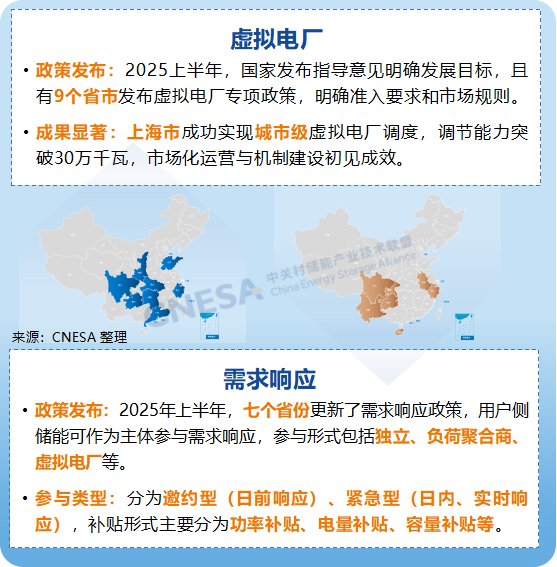
Improve the regulation capacity of the system: accelerate the construction of regulation resources such as pumped storage and new energy storage, tap the regulation potential of virtual power plant and load side, and expand the interactive application of vehicle network.
Enhance the carrying capacity of the power grid: build a main distribution micro-collaborative power grid platform, expand the scale of inter-provincial and inter-regional transmission channels, promote the intelligent upgrading of the distribution network, and optimize the power flow direction and the scope of resource allocation.
Optimize the dispatching control mode: further clarify the regulatory relationship and the scope of responsibilities of each organization, explore the cluster coordinated dispatching of the base, and accelerate the call of the integrated output curve of new energy and in-station energy storage.
(4) To improve the market-oriented mechanism
, both documents emphasize the two-wheel drive of "market guidance + policy guarantee" and build an institutional environment adapted to the characteristics of new energy.
Market mechanism construction: promote the improvement of the national unified electricity market, shorten the medium and long-term trading cycle, widen the price difference in the spot market, and enrich the ancillary services; promote the construction of the model rules for the integration of the base to participate in the market and the construction of the market rules for the new subjects to participate in the market through aggregation and direct trading; Promote the coordination of "electricity-certificate-carbon" market, improve the green certificate trading and capacity price mechanism, and improve the retail market price mechanism reflecting the time-sharing value difference. Changes
in the impact of
energy storage development (1) The systematic expansion
of energy storage applications and the integration of new energy development environment are promoting the penetration of energy storage into more diverse scenarios, from traditional scenarios such as peak shaving and frequency modulation on the grid side and supporting energy storage at new energy stations. It extends to new scenarios such as peak shaving and valley filling on the user side, aggregate dispatching of virtual power plants, and off-grid power supply of microgrids. With the help of policies in green power direct connection, zero carbon park and other sub-areas, in some key industries and regions, energy storage collaborative new energy applications will take the lead in expanding applications.


Chart: Electricity Spot Market Progress by Provinces (as of December 15, 2025)
(III) Under the dual requirements of
integrated application and market-oriented development, the new energy storage industry will no longer be satisfied with the "usability" of the system, but will pursue "ease of use and durability" , and will gradually develop into a key industry serving all kinds of traditional and new productivity, and become a new energy storage industry. Build a multi-technology system, Drive longer < IMG SRC = "https://img.databm.com/file/news/20251225/694c9f21ae8cb4453595. With the coordinated efforts of various national policies, the new energy storage industry will continue to release its development vitality and provide solid support for the transformation of China's energy structure." It will help build a clean, low-carbon, safe and efficient energy system and inject continuous green kinetic energy into the high-quality development of the economy and society.


 浙公网安备33010802003254号