
On December 7, the State Pipeline Network Group, in conjunction with the China Academy of Work Safety, successfully carried out the first full-scale high-pressure pure hydrogen pipeline jet fire series test in China at the pipeline fracture control test site of the State Pipeline Network Group in Hami, Xinjiang, filling the technical gap in this field. The purpose of this
test is to obtain key data such as flame characteristics and thermal radiation influence range after hydrogen leakage, and to define the thermal radiation damage threshold and safety protection distance after hydrogen leakage ignition. The test platform consists of a hydrogen main pipe, a jet flame branch pipe, an ignition system and a data acquisition system. Among them, the main hydrogen pipeline has a hydrogen storage capacity of 12000 cubic meters, which can meet the needs of continuous leakage and jet fire monitoring under various test conditions.
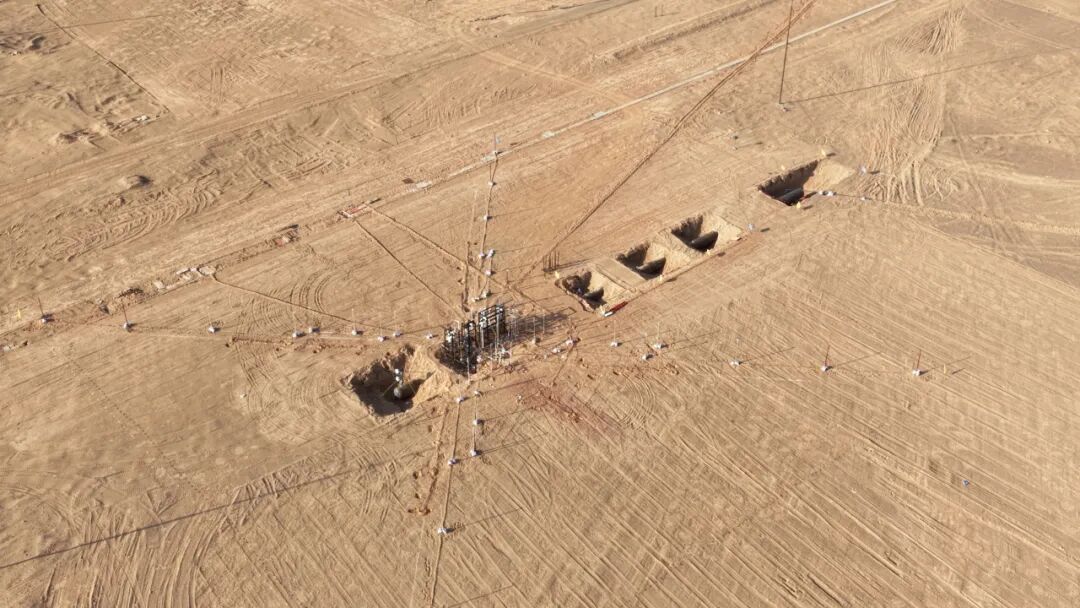
The picture shows the hydrogen main pipeline, jet fire branch pipe and other test platforms built for this series of tests.
The test started on November 11 and took nearly one month to complete, covering four leakage apertures of 5 mm, 10 mm, 25 mm and 50 mm, setting three injection directions of horizontal, inclined 45 degrees and vertical, and three pressure levels of 3.4 MPa, 6.3 MPa and 10 MPa, totaling 33 groups of test conditions. The jet fire branch pipe is installed at the top of the main pipeline at 12 o'clock to simulate the actual leakage scenario of the hydrogen pipeline. The ignition task is carried out by professional fire-breathing UAV and remote high-voltage electronic ignition device, which ensures the comprehensiveness of data acquisition and is the first time in China. During the test, the test team deployed high-precision test equipment such as thermal radiometers, pressure and temperature sensors, thermocouples and high-speed cameras around the leak to capture the flame characteristics and thermal hazards of the pipeline hydrogen leak jet fire in real time.
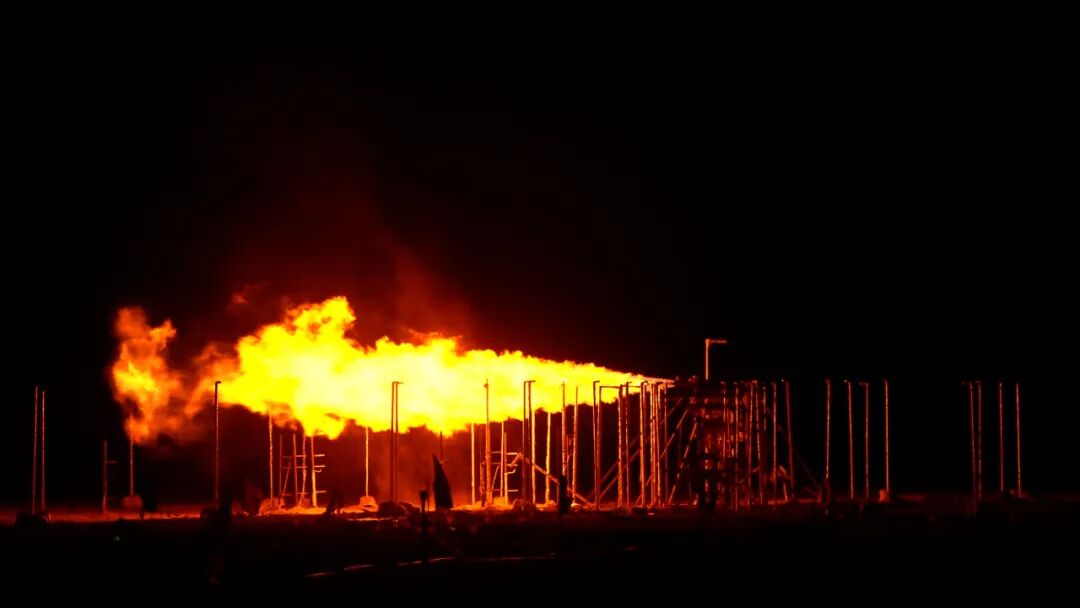
The figure shows a test condition in the horizontal direction.
The preliminary analysis shows that the data obtained from the test are complete and effective, and the results will provide a scientific basis for the determination of the safety spacing of pure hydrogen pipelines. Subsequently, the National Pipeline Network Group will further optimize the thermal radiation assessment model of hydrogen pipeline leakage jet based on the test data, help the construction of China's hydrogen pipeline safety standard system, and provide strong support for the large-scale safe transp ort of hydrogen energy industry and the transformation of energy structure under the goal of "double carbon".
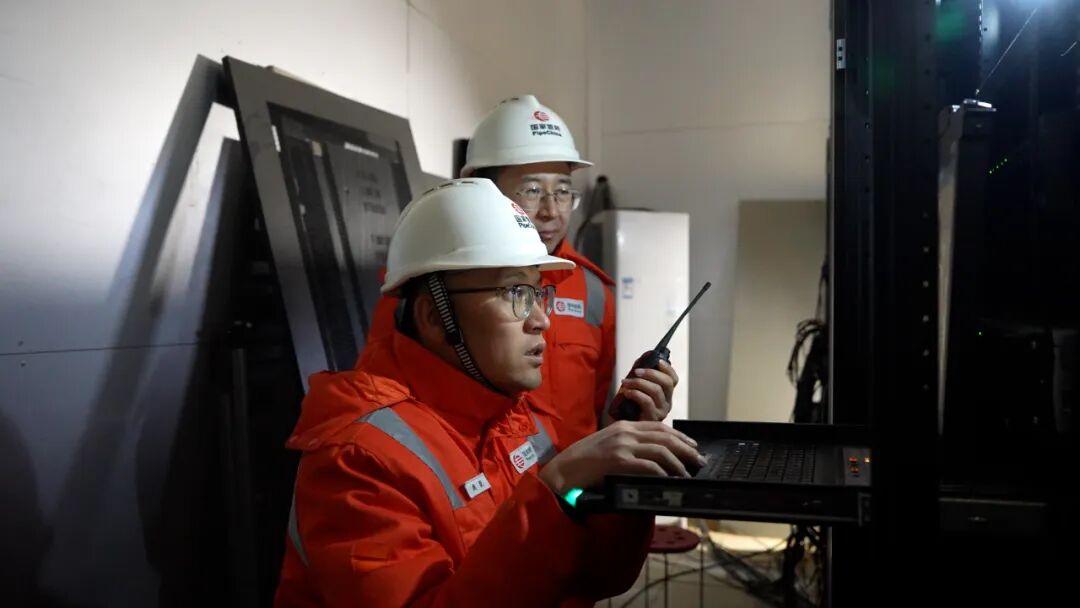
The picture shows the staff recording the test data. The pipeline fracture control test site of the National Pipeline Network Group, which
carried out the pure hydrogen pipeline jet fire test, is the third and only full-scale pipeline explosion test platform in the world and the only one in Asia, as well as the only test platform in China with the technical conditions of full-scale explosion test for high steel grade, big bore and multi-media pipelines. The test site has carried out five full-scale gas explosion tests of 1219/1422 mm, X80/X90, 12/13.3 MPa, different specifications, different steel grades and different media, three low-temperature cracking and anti-cracking tests, three natural gas pipeline leakage and jet fire tests. It provides an important basis and strong support for the construction of long-distance pipelines and the formulation of standards for multi-media pipelines.


 浙公网安备33010802003254号